The AgripreneurApproach to Farming
Nurturing healthier food systems, stronger ecosystems, and thriving farmers and growers through data driven insights, meaningful technology, and community powered learning.
Farming is no longer defined only by experience and intuition. Today, successful growers rely on predictability, efficiency, and market alignment to remain competitive. Across regions, a new class of growers is emerging who approach agriculture as a structured, profit-driven business rather than a seasonal activity.
These growers focus on systems that reduce uncertainty, improve yield consistency, and optimise resources. This shift is giving rise to the agripreneur, a grower who treats farming as an enterprise.
The Opportunity for Independent Growers in Greenhouse Farming
Greenhouse Farming by the Numbers
- Up to 100% yield increase under protected cultivation for crops like tomato
- Up to 50% capital subsidy available under MIDH
- ₹25 to ₹35 lakhs annual profit per acre in well managed operations
- Year round production enables institutional and export markets
The Problem with Traditional Farming
Open field farming is shaped by variables that are difficult to control.
Weather fluctuations, pest outbreaks, water stress, and yield inconsistency make it challenging to plan production and revenue with confidence. Even experienced farmers face losses due to factors outside their control, making it difficult to scale operations without proportionally increasing risk.
For growers looking to expand acreage, invest capital, or build long-term profitability, this lack of control becomes a structural limitation in traditional farming models.
Why Uncertainty Impacts Farm Profitability
Unpredictable growing conditions directly affect farm income.
Fluctuating yields lead to unstable cash flows, while crop losses from excess rainfall, heat stress, or disease can erase months of effort. Inconsistent produce quality also limits access to institutional buyers, exporters, and long-term supply contracts.
This unpredictability forces many growers to operate reactively. Some hesitate to scale, while others invest but struggle to sustain returns without systems that deliver consistency. This gap highlights the growing need for controlled environment agriculture.
The Greenhouse Advantage in Modern Agriculture
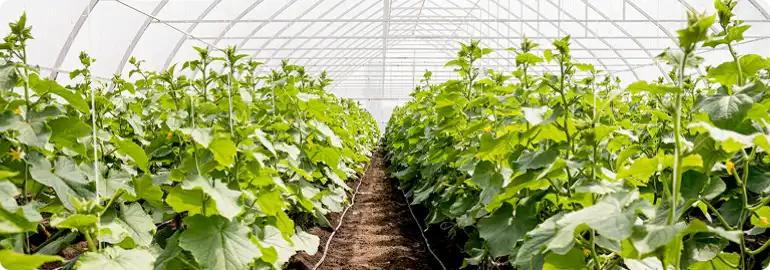
Greenhouses fundamentally change how farming works.
By creating a controlled growing environment, greenhouse farming allows growers to manage temperature, humidity, light, irrigation, and nutrients with precision. Crops no longer adapt to unpredictable external conditions but grow within stable, optimised parameters.
This level of control delivers measurable outcomes. Studies in protected cultivation and greenhouse farming report yield improvements ranging from 20 percent to over 100 percent for crops such as tomatoes, capsicum, cucumbers, and other high-value vegetables when compared to open field farming.
For an agripreneur, a greenhouse is not just infrastructure. It is a core business asset.
How Greenhouses Enable Smarter, Data-Driven Growing
Modern greenhouses extend far beyond basic protective structures.
They integrate climate control systems, automated irrigation, fertigation, and real-time monitoring to maintain consistent growing conditions. Sensors track soil and air parameters continuously, while automation enables timely interventions without constant manual oversight.
As a result, greenhouse farming significantly improves resource efficiency. Drip irrigation systems can reduce water consumption by 40 to 60 percent, while automation and precision climate control help lower energy usage by 30 to 50 percent in well-managed greenhouse operations.
Crops grow in environments designed for performance rather than survival. Over time, this approach supports year-round production, consistent crop quality, and faster learning curves for growers.
Why Greenhouse Farming Makes Financial Sense
From a business perspective, greenhouse farming offers clear structural advantages.
Higher yields per unit area increase output without expanding land. Consistent quality improves access to retail chains, institutional buyers, exporters, and contract-based pricing models. Predictable production enables better pricing stability and long-term planning.
Energy and water remain among the largest operating costs in controlled farming. In some greenhouse operations, energy alone can account for up to 40 to 50 percent of production costs, making automation and efficiency critical to profitability.
In Indian conditions, well-managed one-acre greenhouse projects have reported annual profit potential of ₹25 to ₹35 lakhs, depending on crop selection, market access, and operational discipline. For many growers, this marks a shift from subsistence farming to enterprise-led agriculture.
How AgriSage Builds Reliable Greenhouse Solutions
At AgriSage, greenhouse farming is approached as a complete, integrated system rather than a standalone product.
Each greenhouse is designed and built around your specific requirements, including crop type, geographic location, climate conditions, scale, and business objectives. There is no one-size-fits-all model.
Our approach combines robust greenhouse structures with integrated smart farming technology, where monitoring, automation, and data-driven insights are embedded from the outset. This provides growers with clear visibility, operational control, and confidence in daily decision-making.
Government support further strengthens viability. Under schemes such as MIDH, subsidy assistance can cover up to 50 percent of eligible greenhouse project costs, significantly reducing initial capital investment.
The result is a scalable, efficient greenhouse solution that supports both first-time agripreneurs and experienced commercial growers.
From Growing Crops to Building a Farming Business
Greenhouse farming enables a fundamental shift in how you approach agriculture.
The focus moves beyond yield alone to include consistency, operational efficiency, risk reduction, and profitability. Decisions become data-informed, resource use improves, and exposure to weather-related risk decreases.
This shift allows agriculture to function as a long-term, resilient business, rather than a seasonal or reactive activity.
The Future of Farming in India
As climate uncertainty increases and demand for consistent, high-quality produce rises, controlled environment agriculture is becoming essential.
Greenhouses are no longer niche. They are forming the foundation of future-ready farming systems in India. Growers who adopt these systems early, supported by the right technology and partners, are better positioned to build profitable, sustainable, and scalable farming operations.
Ready to Become an Agripreneur?
If you are looking to move beyond traditional farming models and build a more predictable, efficient growing operation, the opportunity is clear.
AgriSage works with growers to design custom greenhouse solutions tailored to crop requirements, location, and long-term business goals. The focus remains on consistency, confidence, and sustainable growth.
Become an agripreneur today. Grow with confidence. Grow with AgriSage.
Figures mentioned are indicative and may vary based on crop selection, location, climate conditions, farm management practices, and market dynamics. Subsidy availability and amounts are subject to applicable government schemes and eligibility norms.
- National Horticulture Mission and MIDH Operational Guidelines
- ICAR studies on protected cultivation and greenhouse performance
- FAO reports on drip irrigation and water efficiency
- Peer reviewed studies on greenhouse energy optimization and automation
- Environmental Research Letters and related agricultural systems research
- 20 to 50% higher yields with automation and reduced wastage
- 40 to 60% less water use with drip irrigation systems
- 30 to 50% lower energy use through smart climate control
- Up to 50% of operating costs in greenhouses can be energy related